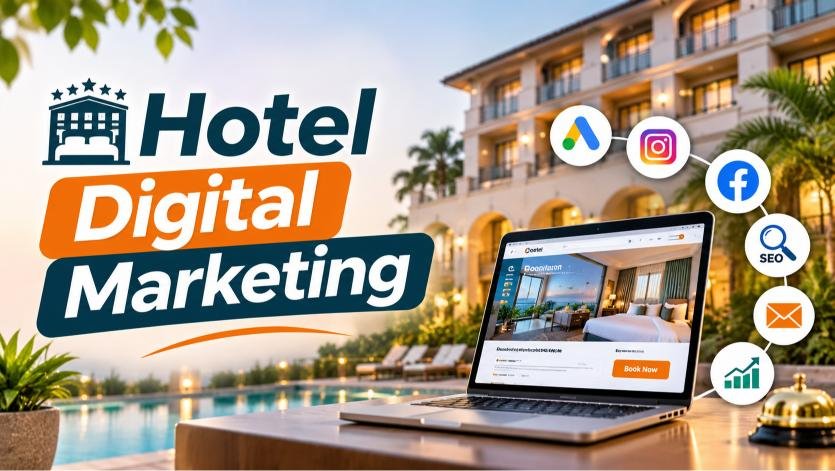
OTA commissions of 15–25% are eating into hotel margins across India. The good news: a smart digital marketing strategy can shift a significant portion of your bookings to direct — where you keep 100% of the revenue. Here's how to do it in 2026.
Why Direct Bookings Matter More Than Ever
Consider this: a hotel doing ₹1 crore in annual revenue through OTAs like MakeMyTrip and Booking.com pays ₹15–25 lakhs in commissions every year. Moving even 30% of those bookings to direct saves ₹4.5–7.5 lakhs annually — without spending a rupee more on marketing.
5 Hotel Digital Marketing Strategies That Drive Direct Bookings
1. Hotel SEO — Rank for Destination Searches
When travellers search "hotels in Jaipur" or "luxury resort near Ranthambore," you want your property appearing organically — not just on OTA platforms. Hotel SEO involves:
- Optimizing your hotel website for destination + category keywords
- Creating individual pages for room types, amenities, and nearby attractions
- Building backlinks from travel blogs and destination guides
- Improving Core Web Vitals for fast loading on mobile
A well-optimized hotel website can consistently capture travellers in the research phase — before they ever reach an OTA.
2. Google Hotel Ads — Appear Where Travellers Search
Google Travel shows hotel listings directly in search results and Google Maps. It has two components:
- Free booking links — Zero cost per click; your rates appear alongside OTA rates
- Performance Max for Travel — Paid placement for higher visibility during peak season
To participate, you need a Google Business Profile, a compatible booking engine (or channel manager), and correctly configured rate feeds. The setup is technical but delivers a consistent stream of cost-free direct bookings once live.
3. Meta Retargeting — Bring Back Website Visitors
Studies show 97% of hotel website visitors leave without booking. Meta (Facebook + Instagram) retargeting shows your property to these visitors as they browse social media — with specific room types, offers, or time-limited deals. Retargeting audiences convert at 3–5× the rate of cold audiences.
4. Review Management — Your Most Powerful Sales Tool
84% of travellers read at least 7 reviews before booking a hotel. A systematic review strategy involves:
- Automated WhatsApp/SMS review requests sent 2 days after check-out
- Prompt, professional responses to every review (positive and negative)
- Monitoring TripAdvisor, Google, Booking.com, and MakeMyTrip simultaneously
- Using review insights to identify and fix service weak points
Moving from a 4.1 to a 4.5 Google rating can increase booking conversion rates by 15–20% according to industry data.
5. Email & WhatsApp Remarketing — Your Cheapest Channel
Your past guests are your most valuable marketing asset. They already trust you. A simple email or WhatsApp campaign with a loyalty offer or seasonal deal converts at far higher rates than any cold advertising channel:
- Post-stay thank-you email with a next-stay discount
- Seasonal packages (Diwali, New Year, summer getaway)
- Anniversary offers for returning guests
- Last-minute room availability alerts for subscribers
How Much Should a Hotel Spend on Digital Marketing?
A common benchmark: 5–10% of gross room revenue allocated to marketing. For a hotel doing ₹50L in annual revenue, that's ₹2.5L–₹5L/year — a fraction of what OTA commissions cost. The key is spending it on channels that drive direct bookings, not on platforms that just increase your visibility on OTAs.
Start with a Free Hotel Digital Marketing Audit
Our hotel digital marketing service covers SEO, Google Hotel Ads, Meta campaigns, and review management — all focused on one goal: more direct bookings. We've helped 50+ hotels and resorts reduce OTA dependency by 20–40%. Book a free audit and find out exactly what's costing you direct bookings right now.